Across Australia, more older primary and secondary students are reaching adolescence without essential swimming and water-safety skills. Royal Life Saving’s 2024 National Drowning Report recorded 323 drowning deaths in the previous year—16% above the 10-year average—reminding us why these skills matter for life.
What the latest research says
New national research from Royal Life Saving (RLS) shows a worrying skill gap as children move from primary to high school:
About half of Year 6 students are below the National Swimming and Water Safety Benchmark (can’t swim 50 m and tread water for two minutes).
Four in ten Year 10 students still can’t meet the Year 6 benchmark.
Lifesaving endurance is rare in mid-teens—around 84% of 15–16-year-olds can’t yet meet the age-17 standard (400 m continuous swim + 5-minute float/tread).
1 in 10 children (5–14) have never attended lessons. Many stop between ages 7–9, before they’ve cemented core survival skills.
These findings sit alongside Australia’s National Swimming and Water Safety Framework, which sets age benchmarks: by age 12, children should be able to swim 50 m and float/tread water for 2 minutes; by age 17, at least half of Australians should be able to swim 400 m and float/tread for 5 minutes, alongside rescue and survival competencies.
COVID-19 disruptions made the gap larger. RLS estimated Australian children missed ~10 million swimming lessons over the pandemic years, which has had a lingering effect on confidence and skills—especially for those who were just about to start or progress lessons.
It’s not “too late”—older beginners learn quickly with the right setting!
Older children and adolescents often progress faster than very young beginners because they can follow instructions, self-reflect, and practise purposefully. The keys are:
Our pathway for older beginners
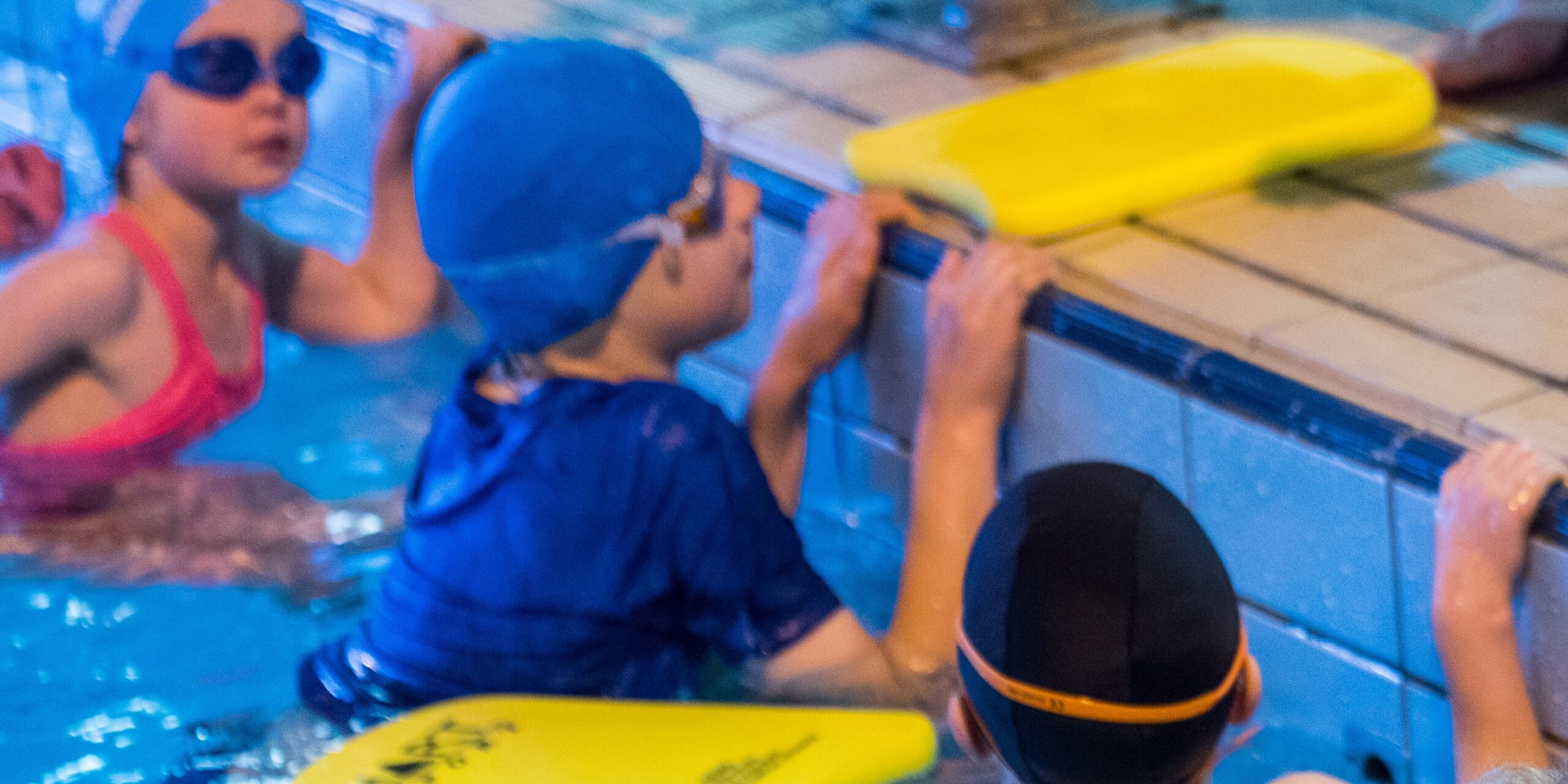
A1 — 7 Years Plus (Water Familiarisation)
Who it’s for: Children 7 years and over who are new to lessons or returning after a long break and want to start in a class designed for their age.
How it runs:
Offered during our normal Learn-to-Swim program times, so families can book into familiar schedules.
Older students are grouped together, ensuring they aren’t placed with much younger children.
Focus:
Building water confidence: safe entries/exits, breath control, body position, submersion.
Foundations of floating and recovery (key survival skills) and short-distance propulsion.
Gentle, encouraging coaching that recognises older beginners may feel self-conscious in mixed-age groups.
Adolescent Beginners — Evenings (9 Years+)
Who it’s for: Ages 9 and over who are learning to swim and prefer a dedicated class outside our main Learn-to-Swim times. Ideal for students who feel uneasy joining younger groups, have sensory considerations, or just want a quieter pool environment.
How it runs:
Evening classes with peers of a similar age.
A supportive, low-pressure vibe that normalises being a beginner at any age.
Coaching that prioritises survival skills first, then builds into efficient freestyle and backstroke.
What to expect?
A judgement-free start: Your child won’t be the only older beginner. Lots of families are starting later, especially after the pandemic.
Evidence-aligned milestones: We design our lesson goals to align with the National Swimming and Water Safety Framework benchmarks—so your child’s progress maps to recognised national standards.
Visible progression: From confident submersion and floating → short propulsion → 25 m stamina and controlled breathing → 50 m continuous swim and 2-minute survival float/tread → (for teens) staged endurance to 200–400 m with stronger technique and water-safety scenarios.
Ready to start?
A1 — 7 Years Plus (Water Familiarisation): Runs during regular LTS times, perfect for 7–12 year-olds taking their first strokes.
Adolescent Beginners (9+): Evening classes for older learners who want a quieter, age-matched group outside normal LTS.
Click here to view availability and enrol:
References
Royal Life Saving Society – Australia (2024) National Drowning Report 2024. Available at: https://www.royallifesaving.com.au/research-and-policy/drowning-research/national-drowning-reports (Accessed: 8 September 2025).
Royal Life Saving Society – Australia (2025) From Primary to High School: A Generational Decline in Swimming Skills. Available at: https://www.royallifesaving.com.au/about/news-and-updates/news/2025/mar/decline-in-swimming-skills-puts-lives-at-risk (Accessed: 8 September 2025).
Royal Life Saving Society – Australia (2020) National Swimming & Water Safety Benchmarks. Available at: https://www.royallifesaving.com.au/about/news-and-updates/news/2020/aug/framework (Accessed: 8 September 2025).
ABC News (2023) Children missed ~10 million lessons during COVID-19. Available at: https://www.abc.net.au/news/2023-01-09/new-report-estimates-children-missed-10-million/101836614 (Accessed: 8 September 2025).